
What to Buy in Morocco: Souvenirs, Prices and Where to Shop
Buy the bowl in Fes if you can meet the potter. Wait for Kelaat M’Gouna to choose your rose water. And if Marrakech is your last stop, that is a good time to buy the lantern you would otherwise carry through six hotels. The best Moroccan souvenirs are the ones you understand before you pay and still want to use when you get home.
By Complete Morocco · Published and retail prices checked
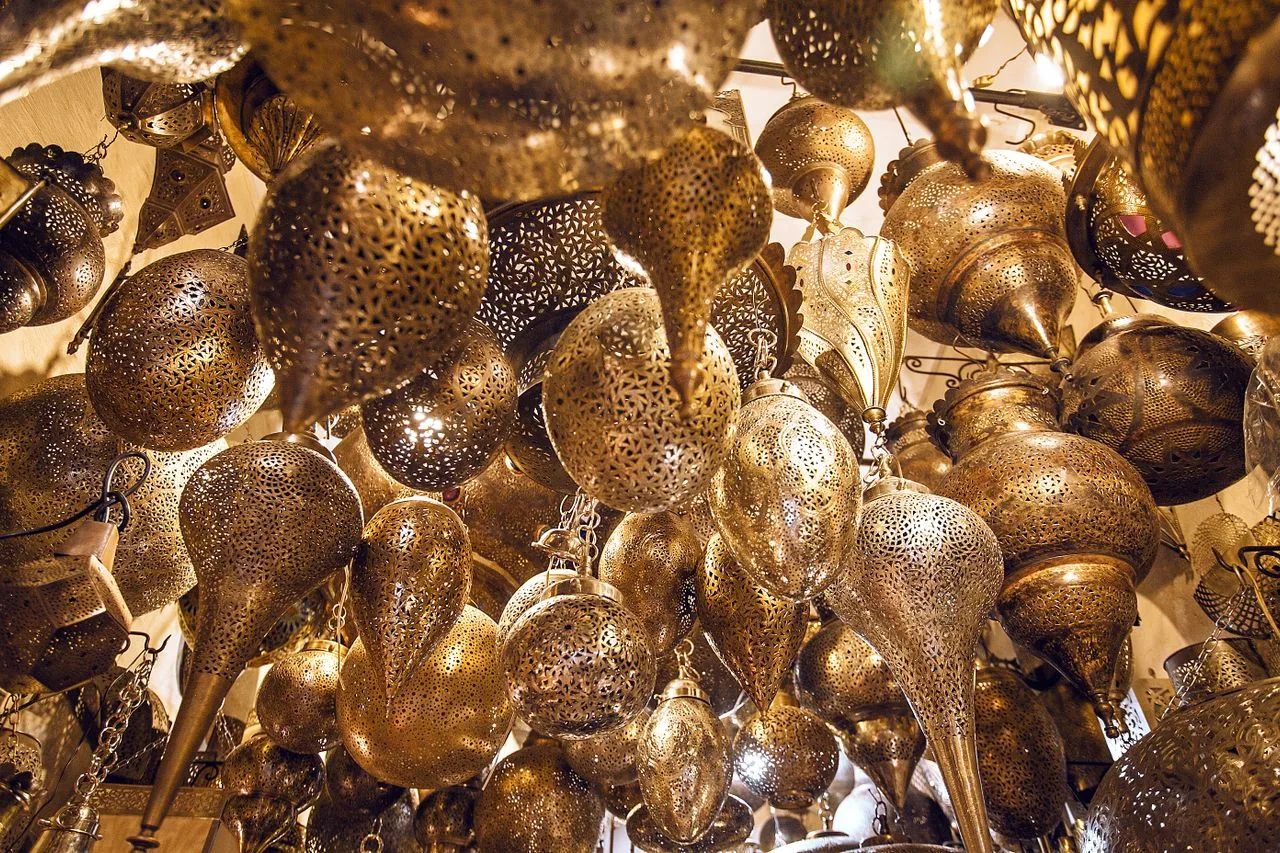
Which Moroccan souvenirs are worth bringing home?
For a first trip, choose one thing you will use, one thing you can eat and one thing you saw being made. A pair of babouches you tried on in Fes, a sealed packet of ras el hanout and a small copper tray with the maker’s name make a more personal collection than a suitcase filled in the last hour.
| Who or what you’re shopping for | Start with | What to ask at the counter |
|---|---|---|
| A cook, under 100 MAD | Culinary rose water, saffron threads or ras el hanout. | What is the net weight or bottle size? Is this one intended for cooking? The price examples below give you a starting point. |
| A carry-on-only traveler | A small flatwoven pouch, scarf, unfilled leather pouf cover or a postcard by a named local artist. | Can I handle the exact one I’m buying and see how small it folds? |
| Someone who sets a beautiful table | A painted Fes bowl, a set of tea glasses or a hammered tray. | Is it intended for food or drinks? How big is the box once each piece is wrapped? |
| Someone furnishing a home | A rug measured for a particular room or a lantern selected for a particular corner. | What are the complete dimensions, material and delivered price? Can those details go on the invoice? |
| Children or several small gifts | Illustrated cards, colorful fabric purses, woven bracelets or souvenir magnets. | Is the price for one or the group? May we choose the colors individually? |
Where to shop in Morocco, city by city
Start with your route. A town associated with a craft gives you a chance to meet a maker or compare workmanship. You can still buy a beautiful piece elsewhere. Where you found it, where it was made and what it is made of are three different questions.
| Stop | What to look for | How to spend your time |
|---|---|---|
| Casablanca or Rabat | Small gifts and contemporary Moroccan design. Rabat is also known for carpets. | In Casablanca, the arcades of the Habous quarter are a good place for a first browse. Look at a fixed-price display to get a feel for dirhams and quality. Save a bulky purchase for later unless the piece itself matters. |
| Chefchaouen | Woven blankets, lightweight textiles and small gifts. | Unfold a blanket in daylight. Note the size and fiber, especially if you intend to compare it with a heavier rug in Fes. Plan your Chefchaouen medina walk. |
| Fes | Blue-and-white ceramics, leather slippers, trays and copperware. | Browse the medina, listen for the metalworkers around Place Seffarine, and leave time for a pottery workshop if you want to see the process. Explore Fes and its craft districts. |
| Erfoud and the southeast | Dates and regional food gifts. | Compare variety and weight, then check the entry rules at home before buying food. Erfoud and the Tafilalet date-growing area. |
| Kelaat M’Gouna | Rose water and other rose products. | Read the ingredients with the producer. For a kitchen gift, look for a sealed bottle explicitly labeled for culinary use. Buying rose water in the Valley of Roses. |
| Marrakech | Lanterns, leather, textiles, baskets and spices. | Browse Souk Semmarine, then use the lanes around Rahba Kedima for a different mix of stalls. If Marrakech is your last city, arrange protective packing for large items here. Marrakech souk route and bargaining tips. |
| Essaouira, if your route includes the coast | Inlaid thuya wood and products from the argan-growing region. | Look for woodworkers near the old fortifications. Handle several small boxes and compare how their lids fit. Plan a day in Essaouira. |
On our 10-day private itinerary from Casablanca, you reach Fes before crossing the country to the Sahara. Kelaat M’Gouna comes on the road west from Dades, with Marrakech later. If a small ceramic bowl catches your eye in Fes, have it boxed that day. Save a large lampshade for Marrakech, when there are fewer hotel changes ahead. Essaouira works as a separate coastal extension.
What to buy in the souks: 13 Moroccan gifts, with buying tips
1. Fes pottery, ceramic bowls and tagines
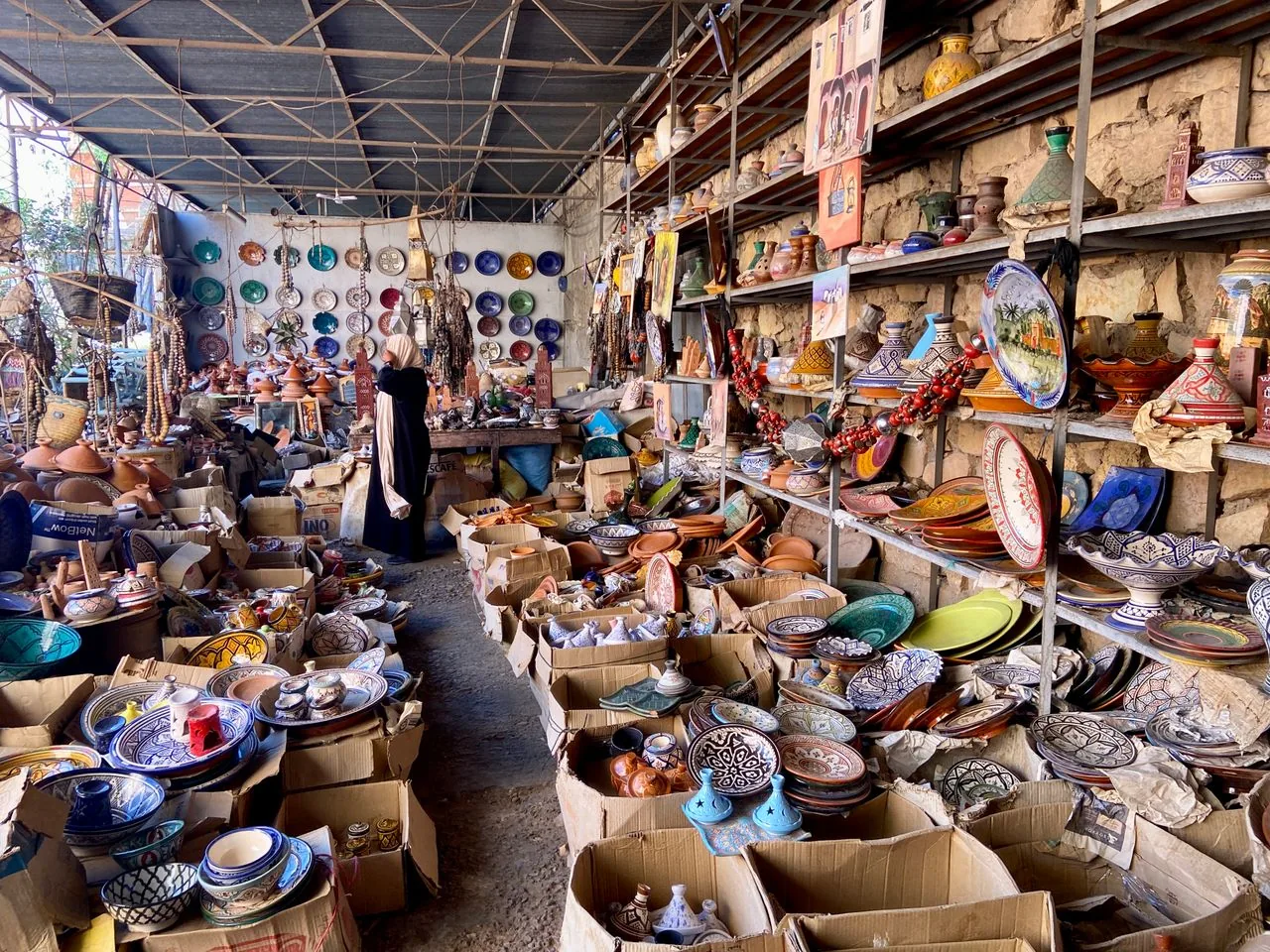
Pick up a bowl and turn it over. Run a finger around the rim for chips, then set it on a flat surface to see whether it rocks. If you are buying a set, put the pieces next to each other. Small differences can be part of the pleasure of hand-painted work, but the lids still need to fit and the plates should stack the way you want.
For a tagine, ask the maker to identify its purpose: cooking, serving or decoration. Ask which heat sources a cooking base is made for and request its care instructions. For a gift, a small bowl is easier to carry than a full-size tagine with a tall lid. The Moroccan National Tourism Office’s Fes shopping guide identifies blue Fes ceramics as a local specialty. On a coastal itinerary, Safi is another major pottery center. Ask where a blue bowl was made before assuming it came from Fes.
2. Leather babouches, bags and unfilled poufs
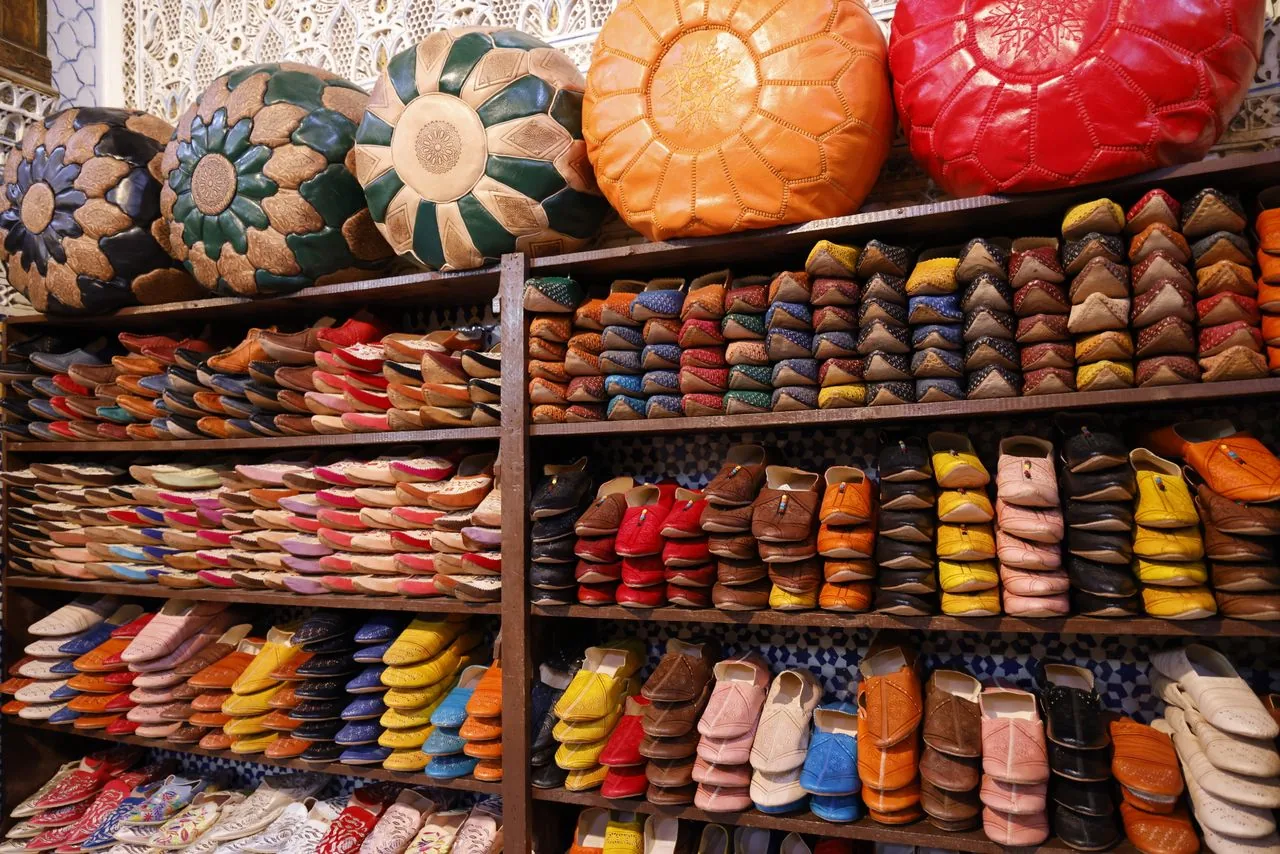
Babouches are the pointed or rounded slip-on shoes you will see in almost every color. Try both slippers and take a few steps. A soft indoor sole and a firmer outdoor sole suit different uses. For a gift, bring a tracing or measurement of the recipient’s foot as well as their usual size. Pointed toes can make two pairs marked the same size feel quite different.
Open a bag, inspect the lining and pull gently at the handle attachment. On a pouf, check the zipper and ask whether the price covers the cover alone or the filling as well. An unfilled pouf packs flat. Ask the seller to show you the opening before you take it home.
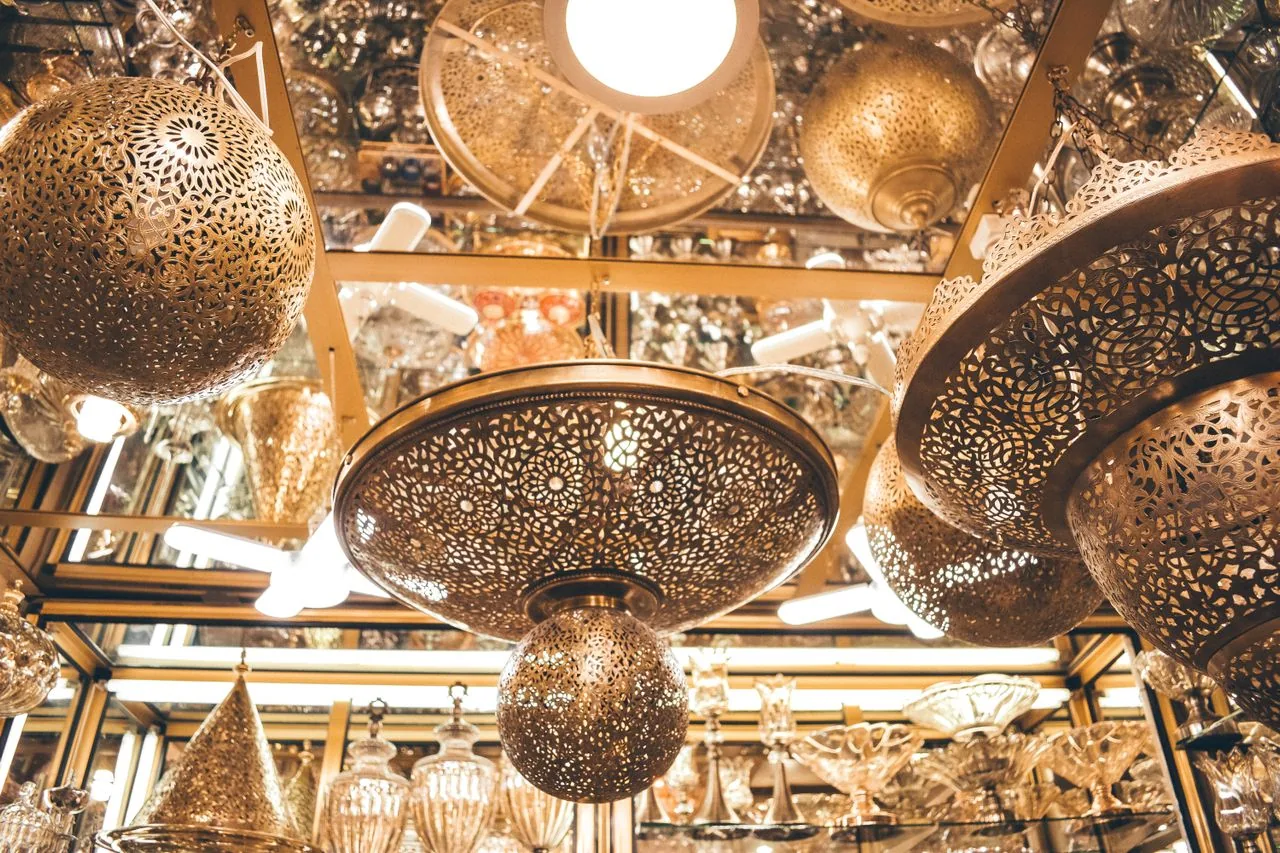
3. Moroccan lanterns and pierced-metal lamps
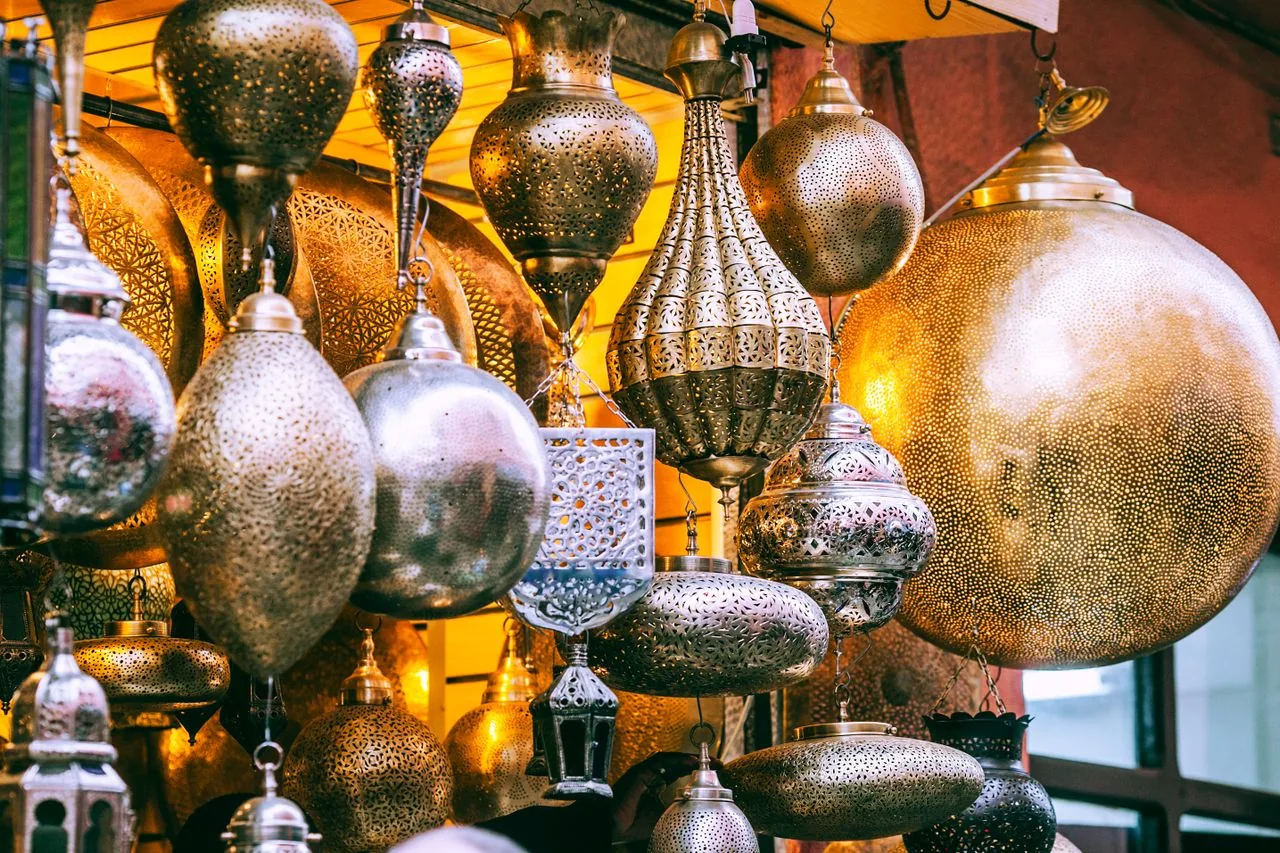
Stand close to a lamp while it is lit, then ask to see it switched off. In daylight you can see the pierced pattern, joins, hinges and finish. Ask whether the body is solid brass, plated metal or another material. A silver-colored finish alone tells you little about the metal underneath.
Measure the widest point, including the handle, door and any glass panels. Ask whether the item is a shade, a candle lantern or a wired light, and what hardware comes with it. For a wired fixture, take a photo of the fitting and label for your electrician at home. Two lanterns of the same height can have very different packed weights and prices.
4. Amazigh rugs, flatweaves and blankets
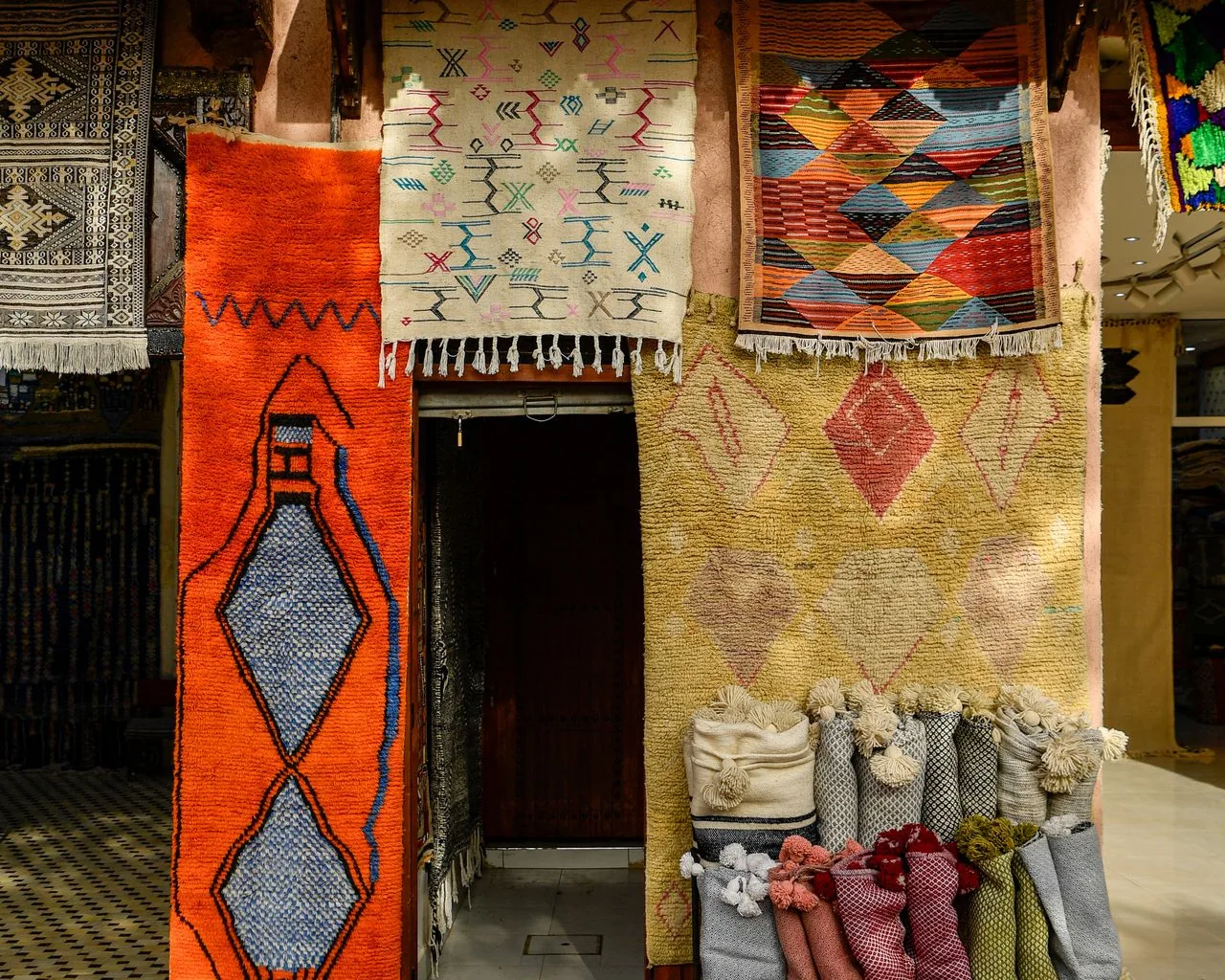
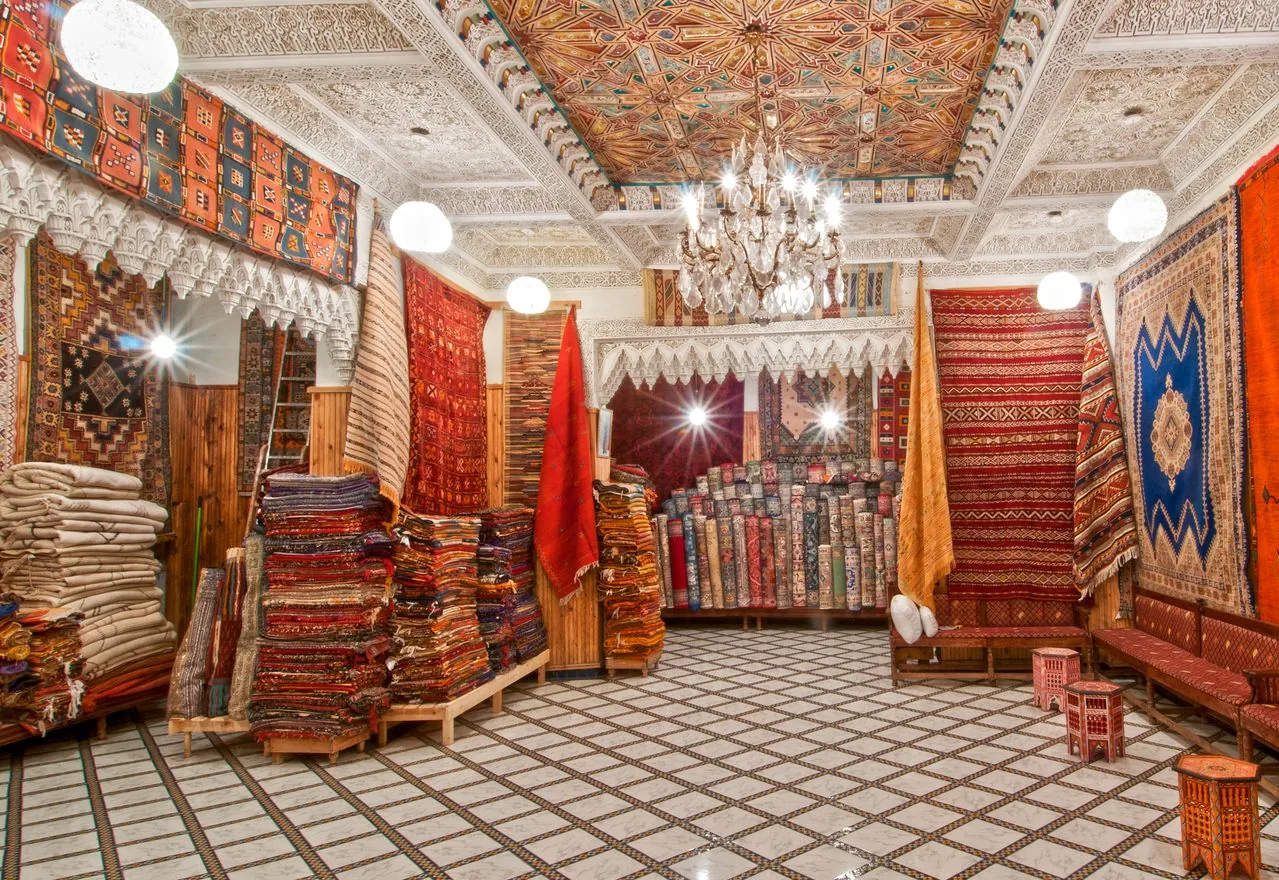
Start with the room, not the showroom. Bring the maximum length and width in centimeters and say whether fringe must fit inside those measurements. A pile rug feels different underfoot from a flatwoven kilim. A thinner blanket can give you color and texture without the weight of a floor rug. Sellers may use “Berber” or “Amazigh” and regional names such as Beni Ourain. Ask who wove the piece, where and with which fibers.
Lay the whole piece flat, including corners. Examine the front, back, ends and any repaired areas. A regional-looking pattern alone cannot tell you the origin, age or fiber. If several rugs come out, take a photograph of your choice with the seller’s permission and put the dimensions and any agreed repairs on the receipt. Ask for a price to carry it and a separate, written, insured shipping quote.
5. Kaftans, djellabas, scarves and woven textiles
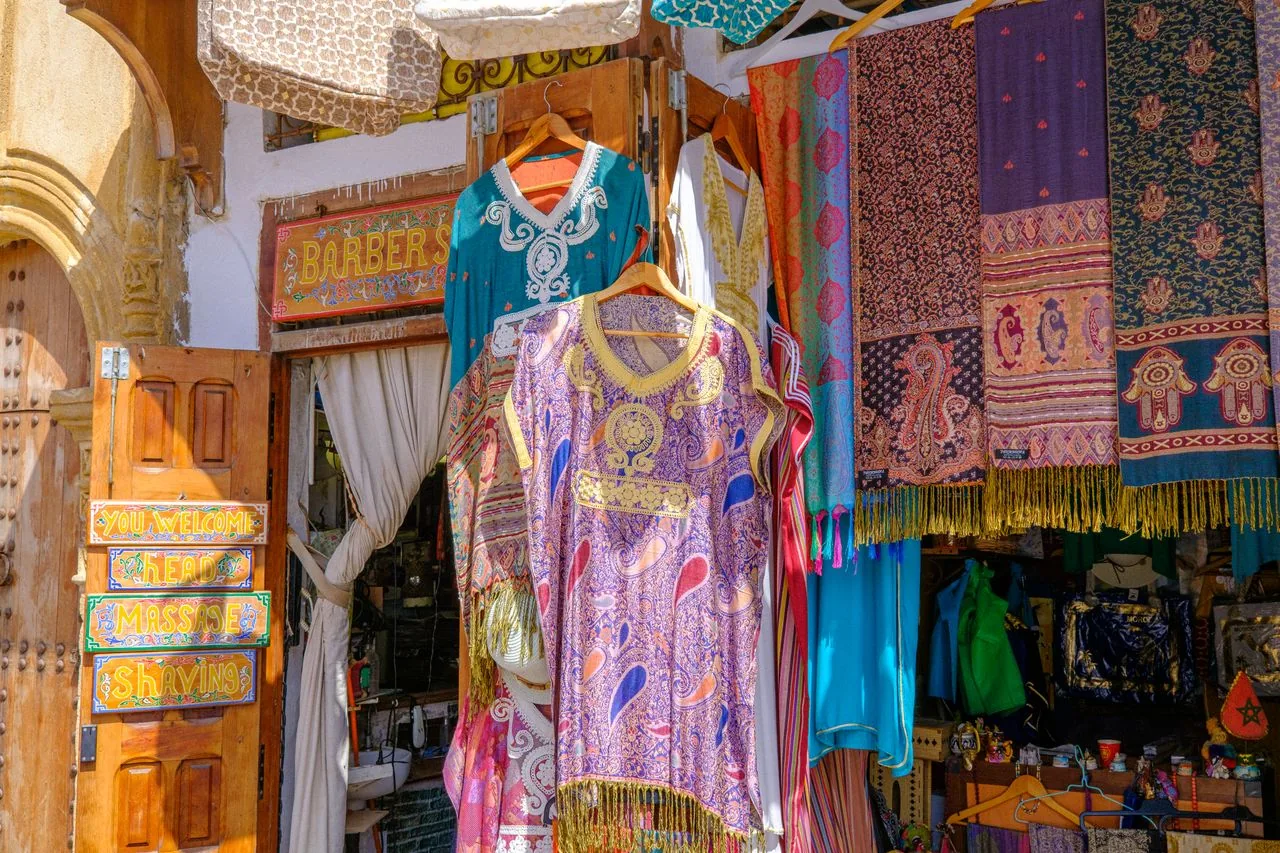
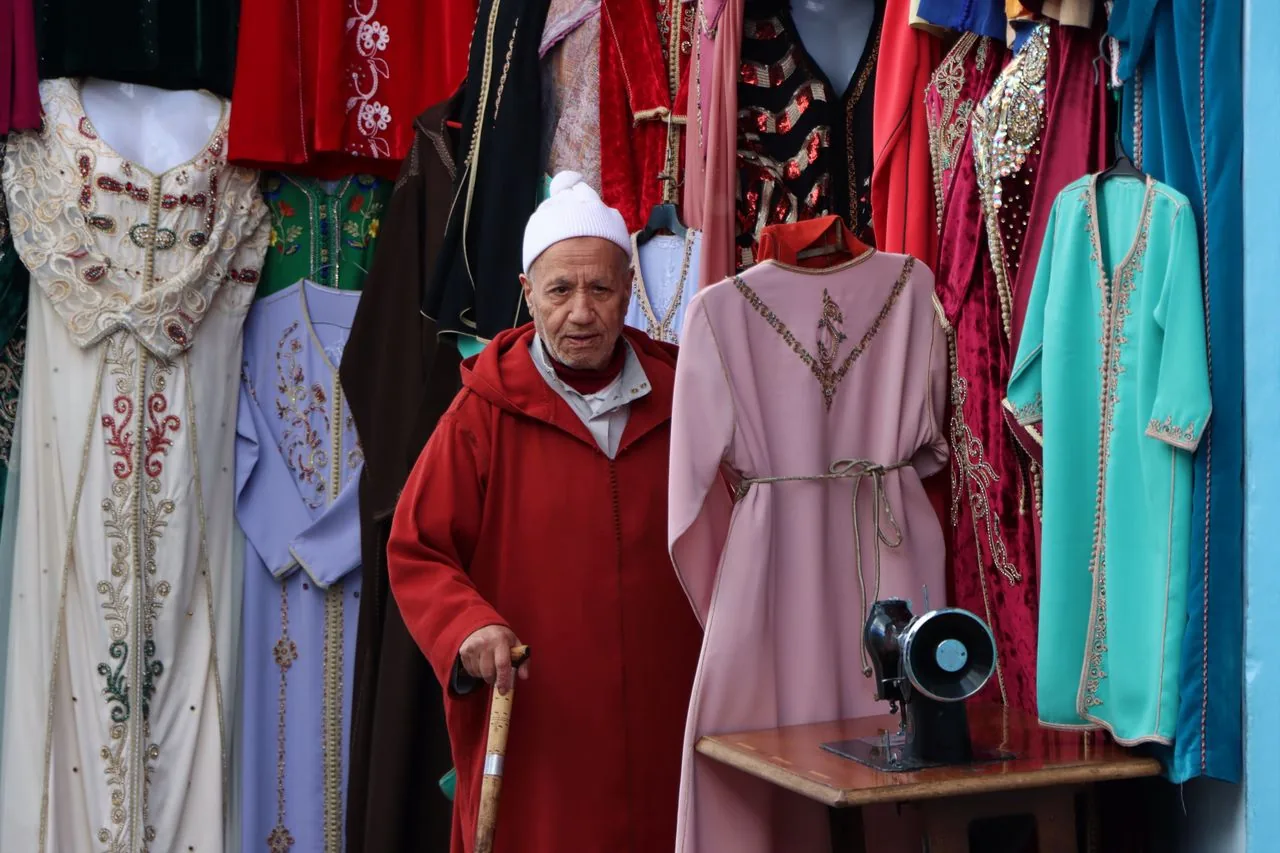
A hood helps identify a djellaba. A kaftan is a different garment, often chosen for its trim, embroidery or occasion wear. Try on the piece over the sort of clothing you will wear underneath. Check the shoulders, armholes and length while sitting down. Look at the reverse of the decoration and ask about fiber and care before paying for intricate work.
A scarf or a narrow woven runner is a forgiving gift when you do not know someone’s size. If you arrange a hem or alteration, agree on the finished measurements, price and collection time. Try it on before you leave town.
6. Fes copperware, tea trays and teapots
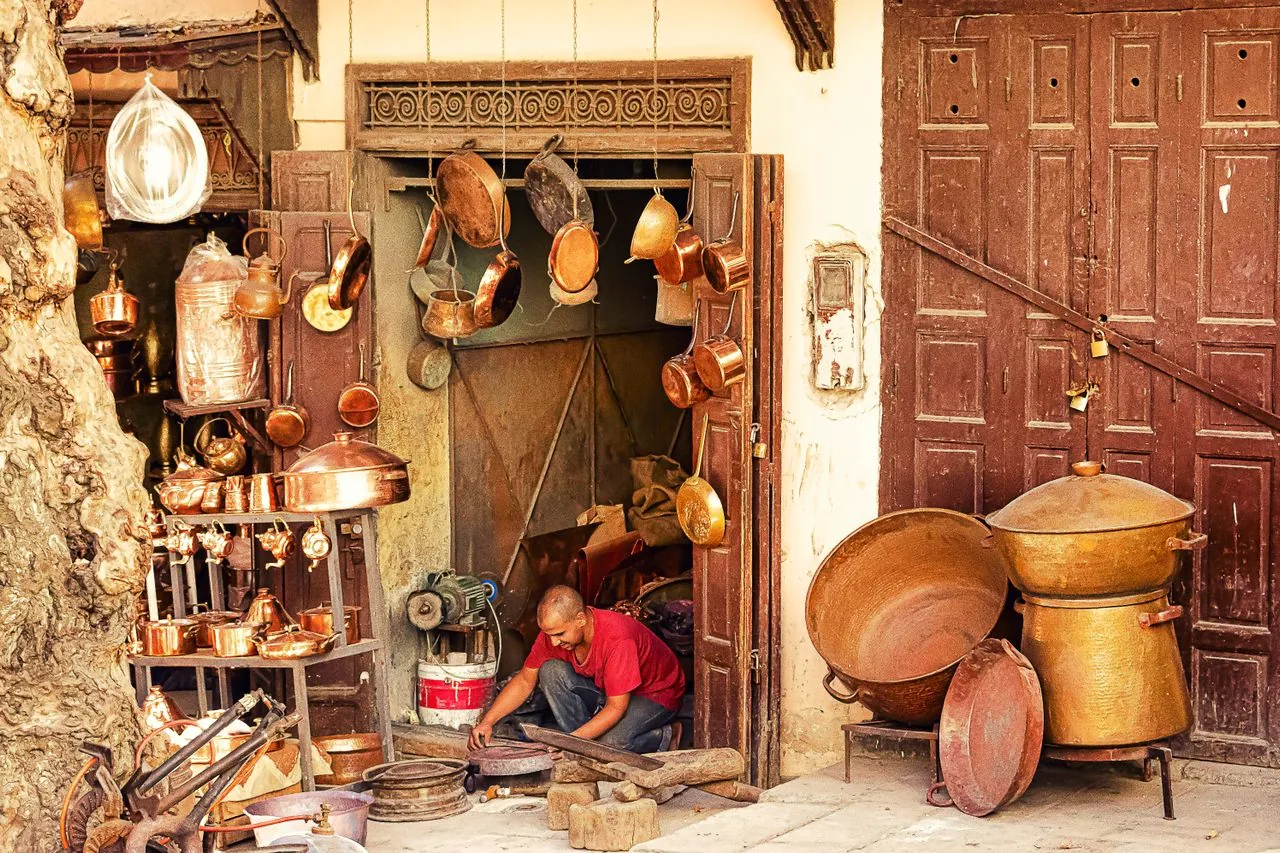
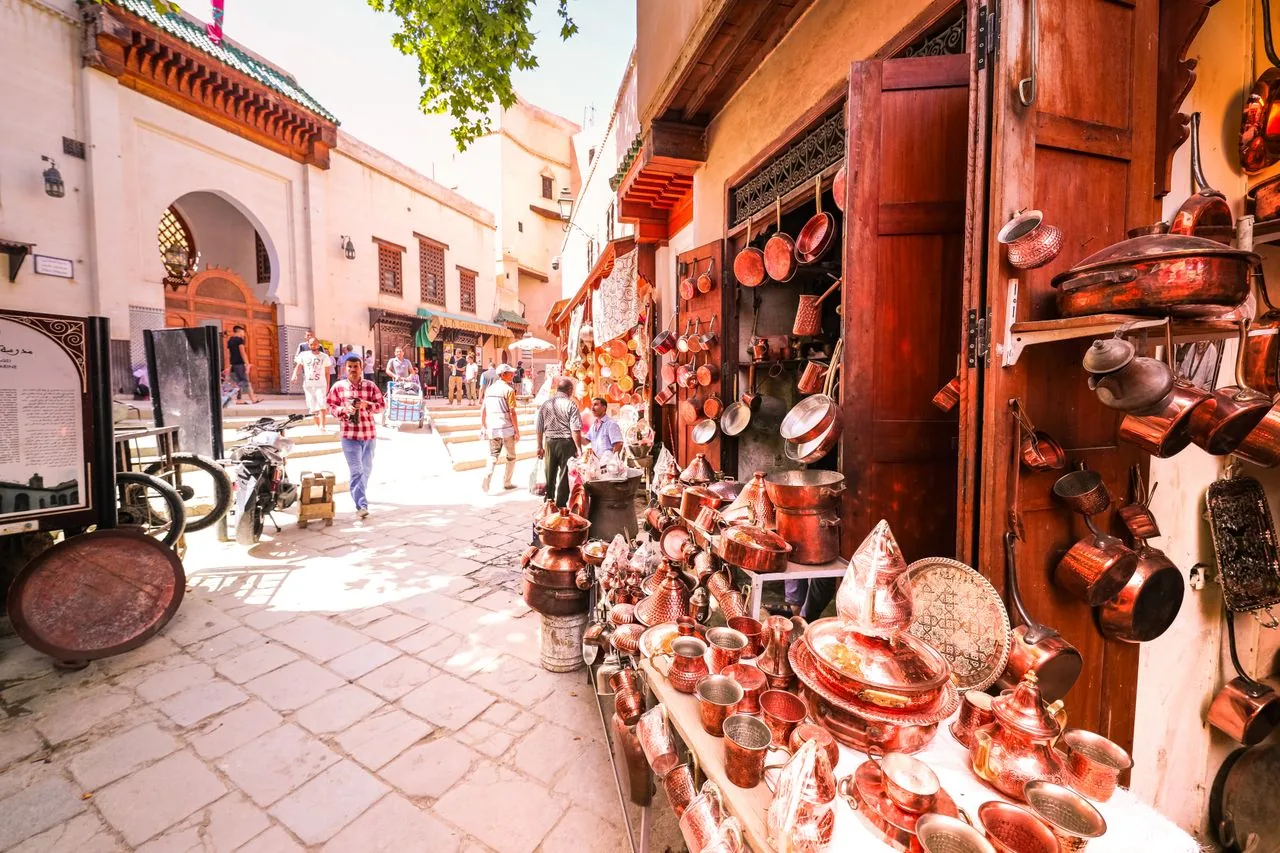
At Place Seffarine, the sound of a hammer often reaches you before you see the workshop. Start by asking what the craftsperson is making. On a tray, check that it sits level and that its edge feels finished. On a teapot, test the lid, handle and balance. Ask about the base metal, lining and intended use if you plan to make tea or cook with it.
A small hammered dish travels much more easily than a broad tea tray. If the maker can engrave initials, write the spelling down and agree on a collection time before paying. Ask permission before photographing anyone at work.
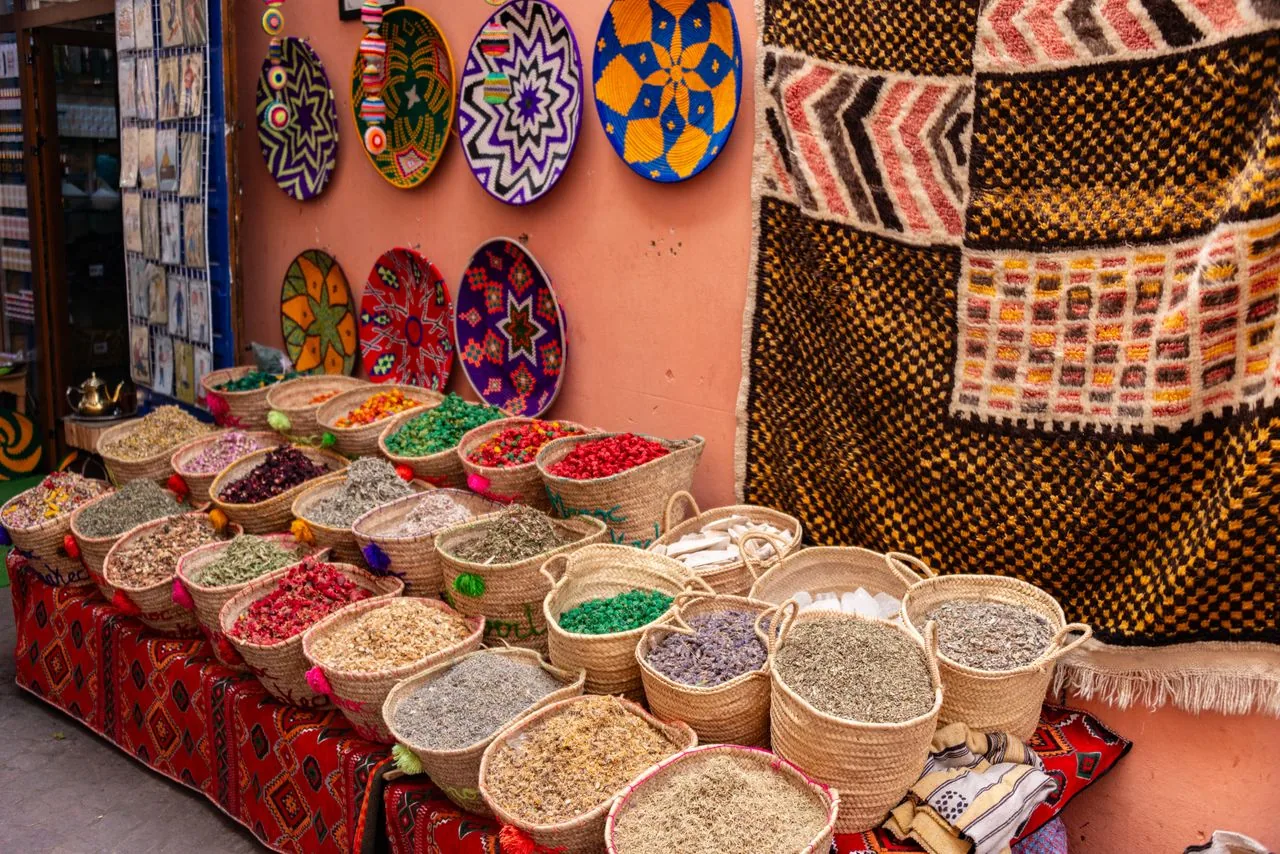
7. Ras el hanout, saffron and other spices
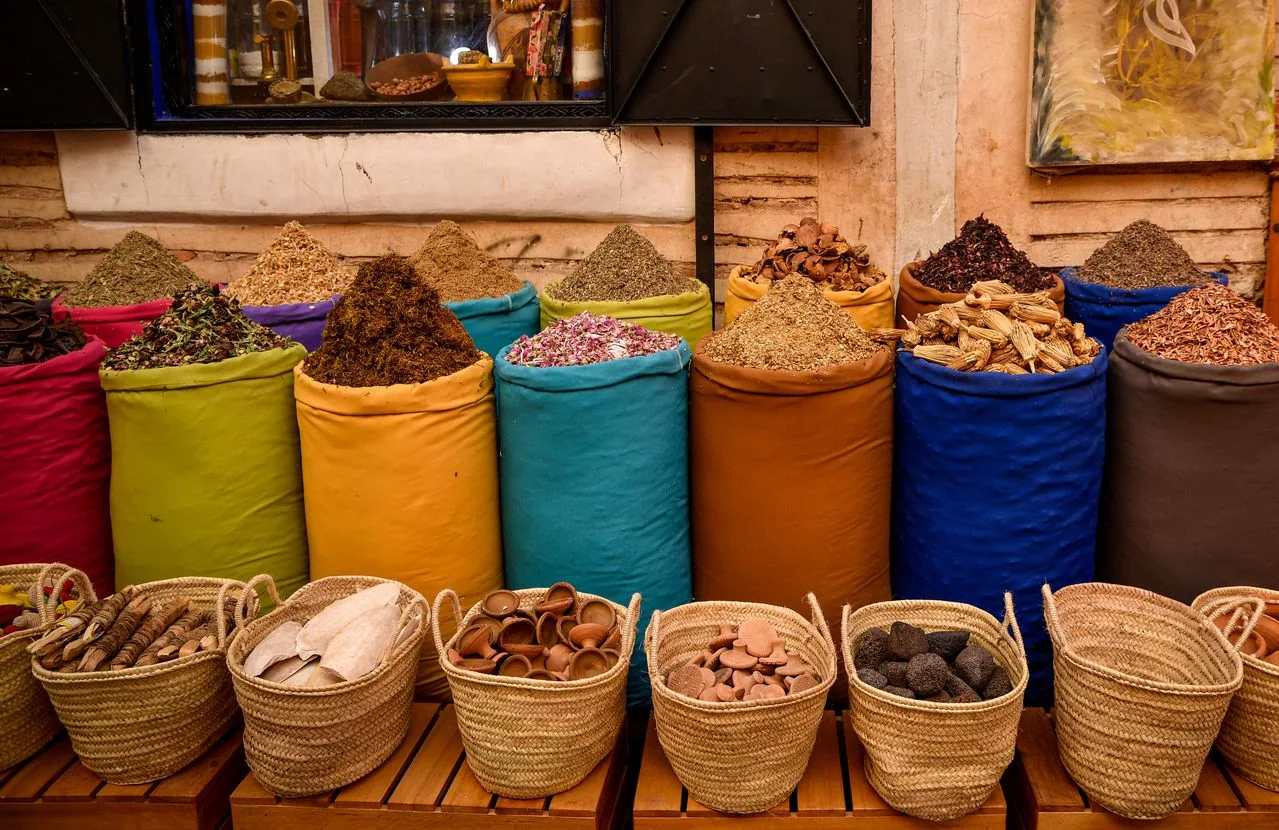
For someone who cooks, ask the spice seller for a small packet they can actually finish. Ras el hanout is a blend whose ingredients and proportions differ between sellers. Ask what is in this version, whether it is hot and what the seller likes to cook with it. Choose a sealed, labeled packet for travel and write the name of the dish on it before you forget.
Saffron is easier to compare by the gram than by the size of the jar. Ask for threads, the named producer or cooperative, the pack weight and origin. If Taliouine is important to you, look for it on the label. Bright colors and impressive spice displays make good photographs, but they tell you little about the age or origin of the packet in your hand.
8. Olives, preserved lemons, dates and amlou
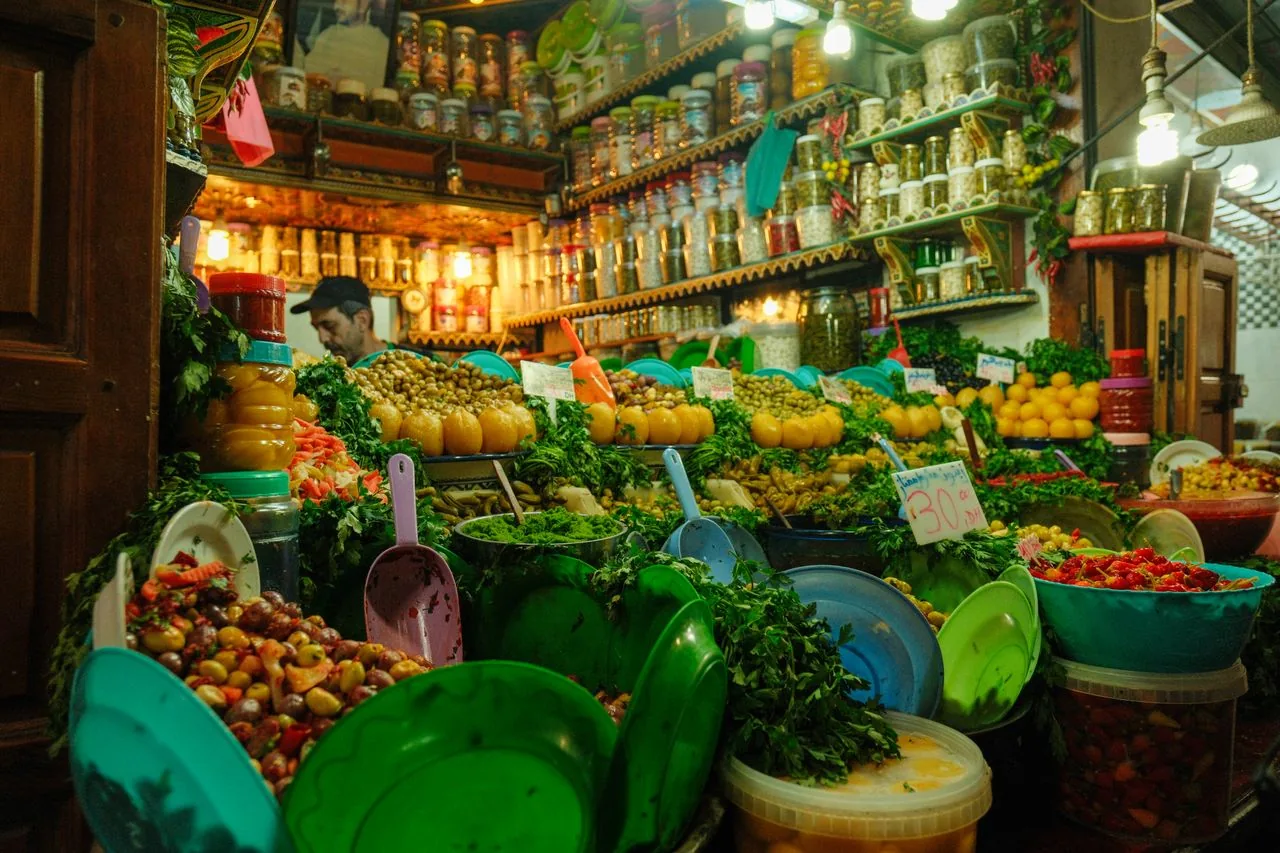
Shop with two different meals in mind: the one you will eat here and the one you hope to cook at home. Sample olives and preserved lemons during your trip. For the suitcase, look for a factory-sealed or producer-sealed container with an ingredient list. A jar of brine is heavy and can leak. Dried spices usually take less space.
Amlou makes a thoughtful gift for someone who enjoyed it at breakfast. Traditional versions combine almonds, argan oil and honey, so check the particular label for nuts and other ingredients. For dates, compare net weight and variety. Check what your destination permits before buying either. Our Moroccan food guide helps you put a dish to the flavors you bring back.
9. Culinary argan oil, cosmetic argan oil and hammam gifts
Decide whether the recipient will use the oil in the kitchen or on their skin. Buy a bottle expressly labeled for that use. Check the ingredient list, seal, producer, volume and date. A tiny cosmetic bottle and a larger culinary oil can look like very different bargains until you compare price for the same volume and purpose.
For a small hammam gift, consider a kessa exfoliating mitt or a sealed pot of beldi black soap. On scented products, read the ingredients with the recipient in mind. A dry mitt is particularly easy to pack. Save the oil or soap for someone who will appreciate the extra wrapping.
10. Rose water from Kelaat M’Gouna
If your journey follows the Dades–Skoura road, this is one purchase worth waiting for. At a producer, ask which bottle contains distilled rose water, which is perfumed and which is meant for food. Look for the producer’s name and volume on the bottle. Rose essential oil is a different, much more concentrated product: compare it with another essential oil, not with a large bottle of hydrosol.
For someone who cooks, a sealed small bottle marked alimentaire gives you a clear starting point. Ask the producer how they use it at home and write the suggestion on the gift. See the guide to buying rose water in the Valley of Roses for more on distillation and local origin.
11. Thuya wood boxes and Essaouira marquetry
On the coast, a small inlaid box is easier to carry than a tray or side table. Open and close it twice, look at how the lid meets the base and check that the lining is clean. On patterned inlay, look along the edges in good light. Ask which wood is used for the base and which for the decoration.
Look for the workshops beneath the old fortifications in Essaouira. A shop that can explain its inlay can also help you choose a box for its practical purpose, whether that is keeping a ring, cards or tea. The national tourism office’s Essaouira shopping guide describes the marquetry around the old ramparts.
12. Woven baskets, market bags and small keepsakes
Pick up a market basket by its handles before you buy it. Are both attached evenly? Does a woven end catch on your clothes? A soft-sided bag often travels better than a rigid basket. Ask the maker what the fiber is and where the item was woven. For plant-fiber goods, check the rules for the country you are taking it to.
When you have several people to buy for, postcards by a local illustrator, small textile purses and a magnet of a place you actually visited make good low-bulk gifts. A modern souvenir can carry a lovely memory. If local production matters to you, ask the seller to identify the maker rather than relying on the name printed on the front.
13. Silver jewelry, enamel and everyday pieces
For earrings, check both fastenings. Try a bracelet over your hand and ask whether a ring can be resized. For an expensive piece, ask the seller to describe the metal, stones, weight and provenance in writing. Silver-colored metal and an “Amazigh-style” design describe an appearance. You need more information if you are paying for a particular metal, maker or antique origin.
Keep the receipt with the seller’s contact details and a photo of the piece. If a seller describes something as antique, ask about the documentation required to take that exact object home before paying. A contemporary piece by a named maker is often an easier keepsake to explain and cherish.
Morocco souvenir prices in dirhams
The prices below were checked on . They are advertised prices from named sellers for the sizes shown. Use them to set a budget and compare materials. An in-person souk quote, a signed studio piece and a purchase delivered overseas can each cost a different amount.
| Item and seller | Size or specification | Listed price |
|---|---|---|
| Fougoug cooperative saffron, Terroir du Maroc | 1 g of Taliouine saffron | 35 MAD |
| Culinary rose water, Les Douceurs du Maroc | 100 ml, rose water labeled for food use | 42 MAD |
| Ras el hanout, Riad Romance in Marrakech | 100 g of the house-listed spice blend | 45 MAD |
| Beldi black soap, Riad Romance | 200 g, eucalyptus version | 50 MAD |
| Amlou, Riad Romance | 250 g, almond, argan and honey | 95 MAD |
| Painted Fes ceramic bowl, Fakhar Art | Model FH-48, offered in 10, 12 and 15 cm diameters. The listing gives a range across the sizes. | 138–189 MAD |
| Colored-metal lantern, Ajbir | 33 cm high and 10 cm wide, silver-colored finish | 169 MAD |
| Meknès-model lantern, Artisanat et Décoration | 24 × 24 × 30 cm, listed weight 1.5 kg before packing | 1,700 MAD |
For example, one 100 ml rose water and one 100 g spice blend come to 87 MAD at the listed prices, before delivery. The two lanterns illustrate why height alone tells you little about price. One measures 10 cm across. The other measures 24 cm across and weighs 1.5 kg before packing. Compare their construction and finish as well as their dimensions. For a rug, request a price against a photo, fiber and exact dimensions: a single price for “a Moroccan rug” leaves out nearly everything that determines its value.
How to bargain in a Moroccan souk
Pick the exact item first. Ask for the price of that piece in dirhams, then check whether the tag, lid, filling, strap, wrapping or delivery is included. A price for “a set” is only useful once you know how many pieces the seller means. For a fixed-price comparison in Marrakech, the Ensemble Artisanal on Avenue Mohammed V is a useful first stop. Note the size as well as the price before comparing it with a souk stall. In a souk where the seller invites an offer, compare two or three genuinely similar pieces before you make one.
There is no reliable rule that you should pay half the opening price. Decide what the object is worth to you and make an offer you are ready to honor. A pleasant “Thank you, I’m going to look around” works when you have not decided. If it is beyond your budget, thank the seller and leave. A workshop visit or glass of tea does not oblige you to buy.
Two phrases help. Bsh-hal? means “How much?” in Moroccan Arabic. La, shukran means “No, thank you.” If a number is hard to hear, ask the seller to show it on a calculator and confirm the currency. Carry some dirhams for small purchases and ask about cards before agreeing on a larger one. See our guide to Moroccan dirhams, ATMs and card payments.
Buying from a maker, cooperative or fixed-price shop
At a workshop, ask “Which part do you make here?” A weaver, painter, metalworker or leatherworker can often show you the stage they handle. The person selling it may be a retailer who knows the maker well. Ask for that name and the town or workshop, especially if you are paying for provenance. A cooperative sign, a pattern or a few irregular stitches settles very little on its own.
For a higher-value purchase, write down the full price, size, materials and any promised work. If a guide brings you to a shop, you can ask whether the stop involves a commission and say how long you want to spend there. If you would rather browse alone or skip shopping that day, say so when planning the visit.
Packing, shipping and bringing souvenirs home
Pottery and glass. Ask the shop to wrap each piece independently. Pack a tagine lid apart from its base, and keep two ceramic rims from touching. Before the box is sealed, photograph the actual item. Once wrapped, make sure it fits your suitcase with padding on all sides. Heavy, fragile tableware is a good purchase for your last city.
Liquids, spices and food. Keep the producer’s label and original seal. Put oil, rose water and preserved lemons inside a separate leak-resistant bag. Casablanca Mohammed V airport lists a maximum container size of 100 ml for ordinary liquids, aerosols and gels in cabin baggage. A partly empty 200 ml rose-water bottle still has a 200 ml container. Check your departure and connecting airports when choosing between cabin and checked baggage. Airport security and the rules for bringing goods into your destination are separate checks. Casablanca airport’s official security FAQ.
If you are flying to the United States, declare agricultural and wildlife products. An officer determines whether the specific item may enter, and the original packaging can help identify it. For the European Union, the rules for food, plants and animal products depend on what you are carrying and where you came from. Look up the exact item before buying fresh produce, seeds, honey, unprocessed plant material or an animal-derived souvenir. USDA traveler guidance · EU food and plant rules for travelers.
Rugs, lamps and bulky orders. Ask for the packed measurements and weight, then compare your airline’s actual baggage charge with the shop’s delivered price. Get the item description, destination address, carrier, tracking, insurance, delivery estimate and responsibility for duties or breakage in writing. Keep a copy outside the package. “Shipping included” leaves several of those questions unanswered.
Questions about souvenir shopping in Morocco
What is the best souvenir to buy in Morocco on a first visit?
Choose something that connects to a stop on your trip. A small painted bowl from Fes, labeled rose water from Kelaat M’Gouna or babouche slippers you have tried on all make practical gifts. For hand luggage, a scarf or a flat leather cover is easier than a lamp or a large tagine.
What can I buy in Morocco for less than 100 dirhams?
Published examples include 1 g of Taliouine saffron at 35 MAD, 100 ml of culinary rose water at 42 MAD, a 100 g ras el hanout blend at 45 MAD and a 250 g jar of amlou at 95 MAD. These are dated examples for specific products. Compare the size and label at the shop.
What is worth buying in Fes rather than waiting until Marrakech?
Fes gives you the chance to see pottery, leather and metalwork in their craft districts. Buy when you find a piece you want from a maker you would like to support. If it is large or fragile, agree on proper packing or a written shipping quote before leaving.
Where should I shop for souvenirs in Marrakech?
Start at Souk Semmarine for slippers and textiles and continue toward Rahba Kedima for baskets and spice stalls. Choose one or two items to compare, note the location of a stall you like, and ask for wrapping dimensions before you buy a lantern.
What should I buy in Essaouira?
Look for thuya wood marquetry and small inlaid boxes, or sealed argan products from the wider region. Check how a wooden lid fits and whether the producer labels the oil for culinary or cosmetic use. A small piece is easier to carry home.
Is it cheaper to buy souvenirs in Fes or Marrakech?
There is no single cheaper city for every piece. Compare the same material, size, construction and finish. The opportunity to buy from a particular maker in Fes may matter more than a small price difference, while buying a bulky item in your last city can reduce handling.
How much should I offer when bargaining in Morocco?
Check whether prices are fixed. When bargaining is welcome, compare like-for-like pieces, decide what you would pay and make an offer you would accept. A fixed percentage of the first price is a poor guide to the value of a handmade item.
Where can I shop in Marrakech without bargaining?
Try the Ensemble Artisanal on Avenue Mohammed V for fixed-price crafts. Write down the material, dimensions and marked price of an item you like. That gives you a useful reference when you browse the medina.
How can I tell whether a Moroccan souvenir is handmade?
Ask who made it, where, and which stages were completed by hand. Look at construction and ask to see another example. A pattern or an uneven finish alone cannot prove its origin. For a costly item, ask for the maker, material and dimensions on the invoice.
Can I cook in a Moroccan tagine bought in a souk?
Ask about the specific pot. Cooking tagines and decorative or serving tagines can look similar. Get the maker’s instructions for food use, compatible heat source and care. If the seller cannot confirm those details, choose a piece specifically sold for cooking.
What is the difference between culinary and cosmetic argan oil?
Start with the intended use on the label. Choose a sealed oil expressly sold for food if it is a kitchen gift. Read the ingredients of a cosmetic product for added fragrance or other oils and compare equal volumes before comparing prices.
Can I bring spices, olives or rose water home from Morocco?
Check the rules in the country where you will land for the specific product, and check airport liquid rules for your cabin bag. Keep the ingredients, weight and producer visible. Travelers entering the United States must declare agricultural products, including food items subject to those rules.
Is it better to ship a Moroccan rug or take it on the plane?
Ask for its wrapped weight and measurements and compare your airline’s oversize or checked-bag fee with an insured delivery quote. For shipping, get a photograph, dimensions, tracking arrangements, damage terms and responsibility for import charges in writing.
Where can I get Moroccan gifts if I only have a carry-on?
Look in medina textile and leather shops for an unfilled pouf cover, a flatwoven pouch, scarf or pair of slippers. Small art prints and postcards also travel well. Buy a ceramic bowl only after you see the size of its protective box.
Make time for the craft you came to see
Tell us whether you want to spend a morning with pottery, leave time for the rug souk or make a short rose-water stop on the Sahara road. We can fit that into a private itinerary and leave the rest of the day for the places you came to visit.
Plan my Morocco trip